
Apparently Still Unemployed: Notes from a Career of Building Businesses


My mother still asks me what it is that I actually do. I explain that I work with companies and their leadership teams to build stronger organisations and more effective boards. She listens, considers it carefully, and then replies, “Yes, but what do you do?”
My career has not followed a single, easily labelled discipline. I began in the education sector, moved into mergers and acquisitions and restructuring law, and worked in logistics, capital equipment and the manufacturing sector. I have led both listed and private businesses, and started and advised founder-led and entrepreneurial companies. The common thread is that I have spent my working life involved in building, rebuilding or guiding organisations through transition.
What follows is not a set of instructions. These are simply recurring patterns that I have observed, regardless of industry, ownership structure or scale.
Leadership sets the tone
Conditions shift; markets, customers, competitors. Leadership determines how the organisation responds. When leadership is clear, aligned and accountable, the organisation moves with intent. When leadership delays decisions or avoids clarity, the organisation becomes uncertain.
Leadership is less about personality and more about consistency.
Strategy only matters when it is executed
Most organisations have plans. Far fewer maintain the discipline to deliver them. Meetings and discussion rarely shift performance on their own. Progress relies on follow-through i.e. selecting priorities, measuring outcomes and finishing what is started.
Execution is a practice, not an event.
Capital influences behaviour
Different ownership structures move differently. Founder-led companies prioritise entrepreneurial intuition. Private equity firms emphasise performance discipline. Listed environments require predictability and narrative coherence.
Understanding the nature of the capital behind the business helps leadership to apply the right pace, tone and communication.
Culture comes from what is reinforced, not from what is written
Value statements are only meaningful if consistently demonstrated. Culture is created through what is rewarded, tolerated or corrected. If behaviour contrary to stated values continues without consequence, the organisation quickly reads the true signal.
Culture forms quietly over time through repetition.
Growth without structure eventually strains
Growth feels energising, but it can disguise underlying weaknesses. When conditions change, those weaknesses become visible. Governance, clear reporting and defined decision-making frameworks are not bureaucratic burdens. They are what allow growth to be sustained rather than fleeting.
Growth is most valuable when it builds something that can stand when the rush passes.
People decisions do not resolve themselves
Misalignment or under-performance rarely improves with time. Delayed decisions increase cost and uncertainty. Addressing these situations early, directly and respectfully strengthens both performance and trust.
Nothing will kill a great employee faster than watching you tolerate a bad one.
Activity is not the same as progress
Busyness is not a measure of effectiveness. Focus creates momentum. Choosing what not to pursue is often the most important leadership act.
Saying no is strategic.
The board should guide, not observe
A board can be an active partner in clarity, accountability and strategic alignment. A symbolic or passive board tends to respond only in moments of pressure.
Boards are most effective when they engage consistently and constructively.
Longevity requires a purpose that is reliable
Profit is necessary but not sufficient. Organisations anchored in purpose attract commitment, maintain coherence and navigate complexity with greater steadiness.
The purpose does not need to be grand. It needs to be authentic.
Closing reflection
Although the industries that I have been involved in have differed, the principles have remained consistent. Leadership, clarity, follow-through and purpose are universal. They are not complicated, but they require discipline.
It may not fit the definition of a “proper job,” but entrepreneurship is work that creates something real in the world. And the work of building is always worth doing.
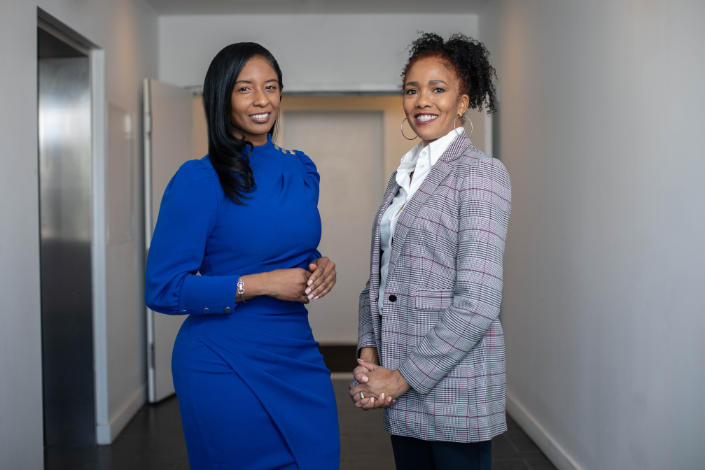
Image: © Peshkova from Getty Images via Canva.com